• Skip to main content
  • Skip to secondary menu
  • Skip to primary sidebar
  • Skip to footer
  • Home
  • About
  • Contact

Pinoy Wit

Cultivating the Filipino soul through culture and history

  • Culture
  • Culinary Heritage
  • History
  • Film
  • Books & Literature
  • Natural Heritage

Why Discovering Philippine History Isn’t Easy

August 6, 2013 by Ninah Villa

I first became fascinated with history when, as a 10 year old, I accidentally stumbled upon romanticized accounts of English medieval history in our school library. From there, I inevitably dived into ancient and Renaissance histories as well.

So while my classmates were out in the sun honing their social and motor skills, I was in voluntary exile, spending a great deal of my young life immersed in the stories of long dead people and forgotten civilizations, but that would prove to be an excellent foundation for a lifelong passion.
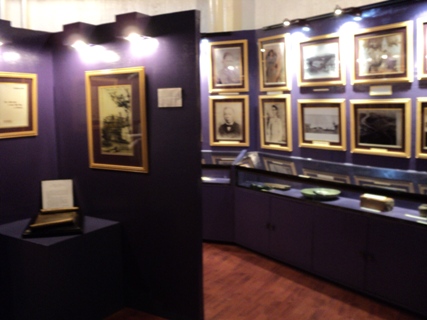
The wonders of Philippine history may be just around the corner.

Undeniably though, I always felt a deep sense of unease. While I reveled in everything I learned, deep inside, I could not accept that I was largely indifferent to Philippine history in particular. It would take many more years before I would learn to appreciate the historical heritage of my own race. If I may however, come to my own defense, there is a valid excuse for my early lack of interest. Circumstances just didn’t make it easy to develop an interest in local history.

Growing up, I was left with the impression that there was a lack in resources that tackled Philippine history. I’d like to stress the word “impression” there. I’m sure we had a fair number of local books (our school library had a Filipiniana section), but to kids discovering history for the first time, they were simply not as appealing as the many different sources available for the histories of other countries and nations. Moreover, the social environment then, both in schools and popular media, did not seem to favor the presentation of our past in interesting or engaging ways.

Even commonly available books then that are still used now for high school and college instruction, leave a lot to be desired. They are segregated in only one of two types. One that coldly presents Philippine history as a collection of dates and names to memorize for exams and one that brims with too much racial pride that we are left to erroneously believe that our heroes were perfect, blameless demigods, and the Spaniards, Hades’ minions.

As was apparent from my experience, I only had to pick up the many colorful breadcrumbs strewn about to develop an interest in medieval history and eventually discover the truer stories of that time. With Philippine history, there are no accidental discoveries of interesting stories that can draw you in. You have to actively seek to learn more and propel yourself with a dash of patriotism to pull through.

I was lucky to have had an excellent Philippine history teacher in college who refused to stick to the norm and exposed the bias and half truths of popular textbooks. I was fortunate too for having discovered historian Ambeth Ocampo, who convinced me that Philippine history can be as absorbing as the intrigues of English royal courts.

I am no historian but I love our history passionately. It is my hope that I too may be able to help the youth of today see, understand and appreciate our true roots.

Filed Under: Thoughts

Primary Sidebar

Looking for Something?

Read About

  • Books & Literature
  • Culinary Heritage
  • Cultural Heritage
  • Film & Television
  • Natural Heritage
  • Philippine History
  • Thoughts
  • Town Bulletin

Books & Literature

Dominican friar with scapular

Noli Me Tangere Chapter 9 English Translation

Chapter 9: Local Affairs Ibarra had not been mistaken about the occupant of the victoria, for it was indeed Padre Damaso, and he was on his way to the house which the youth had just left. “Where are you going?” asked the friar of Maria Clara and Aunt Isabel, who were about to enter a […]

busy Manila streets in the 1890s

Noli Me Tangere Chapter 8 English Translation

Chapter 8: Recollections Ibarra’s carriage was passing through a part of the busiest district in Manila, the same which the night before had made him feel sad, but which by daylight caused him to smile in spite of himself. The movement in every part, so many carriages coming and going at full speed, the carromatas […]

terrace in binondo

Noli Me Tangere Chapter 7 English Translation

Chapter 7: An Idyl on an Azotea The Song of Songs, which is Solomon’s. That morning Aunt Isabel and Maria Clara went early to mass, the latter elegantly dressed and wearing a rosary of blue beads, which partly served as a bracelet for her, and the former with her spectacles in order to read her […]

Film & TV

general luna street cagayan de oro

Demystifying the Heneral Luna Phenomenon – A Movie Review

I woke up to a most singular occurrence, Tuesday last week. Heneral Luna, an indie historical film which had opened quietly the week before, had begun trending in Twitter at 4 a.m. Like the brash and vitriolic general of the same name, it had refused to fade calmly into obscurity and continued to pop in […]

bayan ko GMA TV series

Bayan Ko TV Series Review

I saw one episode of this series on GMA News TV and was impressed. So even if this two disc set seemed a bit expensive at roughly Php400 each, I bought them anyway. I support anything Filipino made that’s better than the usual evening cookie cutter drama fare. Its fictional but faithful account of what […]

Heritage Travel Philippines

The Noli Project

Access the Noli Me Tangere index of chapter summaries in English here.

The El Fili Project

Access the El Filibusterismo index of chapter summaries in English here.

Footer

Resources

Noli Me Tangere Chapter Summaries
El Filibusterismo Chapter Summaries
OPM Featuring Filipino Culture

Recent Comments

  • ROSALIE CAZENAS YNTE on The Rise of Felip and His Bisaya Songs – From P-Pop Idol to Heritage Champion
  • Eloisa Pascual on The Rise of Felip and His Bisaya Songs – From P-Pop Idol to Heritage Champion
  • Eloisa Pascual on The Rise of Felip and His Bisaya Songs – From P-Pop Idol to Heritage Champion
  • Mica on The Rise of Felip and His Bisaya Songs – From P-Pop Idol to Heritage Champion
  • Marilou Tinambacan on The Rise of Felip and His Bisaya Songs – From P-Pop Idol to Heritage Champion

Tags

American colonial rule ancestral houses Andres Bonifacio Bantayan Island Bicol Region bookstores Cagayan de Oro camiguin island Cebu el filibusterismo Felip government Misamis Oriental National Symbols Natural Calamities noli me tangere Old Churches OPM Pampanga pre colonial Spanish colonial period

© 2026 · Pinoy Wit · | N. Villa
Privacy Policy