When calamity strikes, we grieve first for the loss of life and for families deprived of loved ones. The recent earthquake however, which struck Bohol and Cebu has created in us who love history and culture another level of grief. For among the many casualties are our old churches, priceless specimens of our cultural and historical heritage.
I am even more grieved by the suggestion that the damage could have been reduced if our old churches were retrofitted and strengthened as suggested by Jes Tirol many years ago.
Rappler lists ten old churches from the Heritage Conservation Society as having suffered damages but news reports say there were more. Here are seven of them before and after the October 15, 2013 earthquake. I speak of them in the present tense because I cannot bring myself yet to talk about them in the past tense and because there are hopes of restoration.
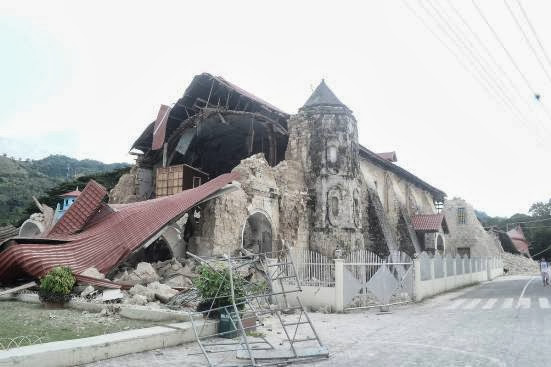
San Pedro Apostol in Loboc, Bohol
The church is situated close to the Loboc River and was first reportedly built in 1602 but was later rebuilt after having been damaged. The Jesuits are credited for having begun construction on the Baroque inspired structure. When the Agustinian Recollects took over, they added buttresses, a portico façade, a funeral chapel and the bell tower.
Loboc Church after the earthquake.
Our Lady of Light in Loon, Bohol
The church is said to be one of the finest examples of Augustinian architecture. Made primarily of crushed coral, the structure is flanked by octagonal towers, presenting a symmetrical façade. Built sometime in 1853 or 1854, the church carries both Neoclassical and Baroque influences.
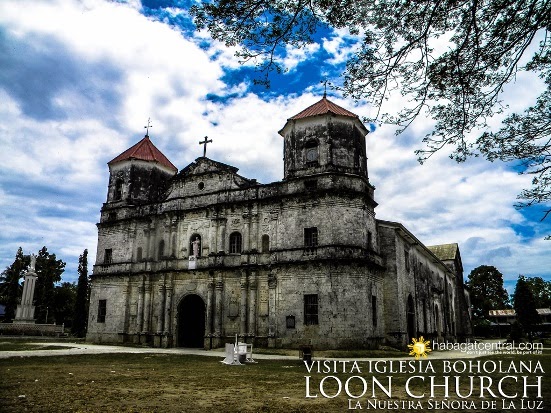
Loon Church reduced to rubble.
Santissima Trinidad Church in Loay, Bohol
According to the official website of Loay, the municipality was founded by Fr. Juan J. Delgado in 1748 and was itself called Santisima Trinidad. The church may have been built in the early 1800s.
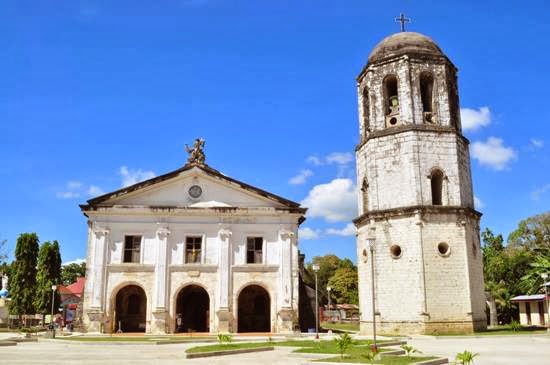
Loay Church partially damaged.
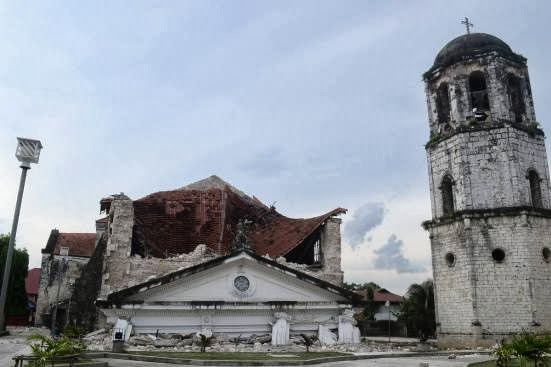
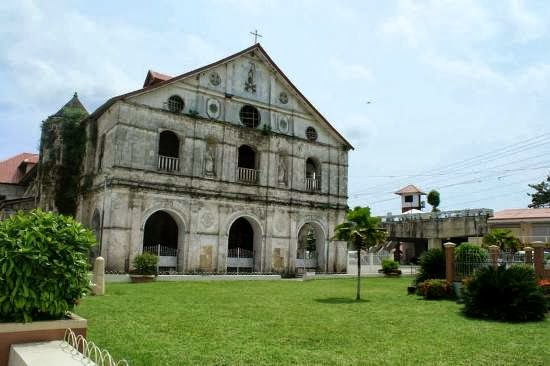
Our Lady of the Immaculate Conception in Baclayon, Bohol
Baclayon Church is one of the oldest in the Philippines. Its construction by 200 laborers under the Jesuits took ten years to finish starting in 1717 and features both Baroque and classical influences. Equally as celebrated as the church is its museum which houses antique relics.
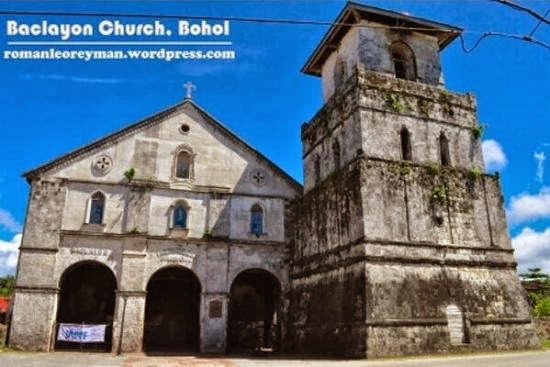
Baclayon Church now.
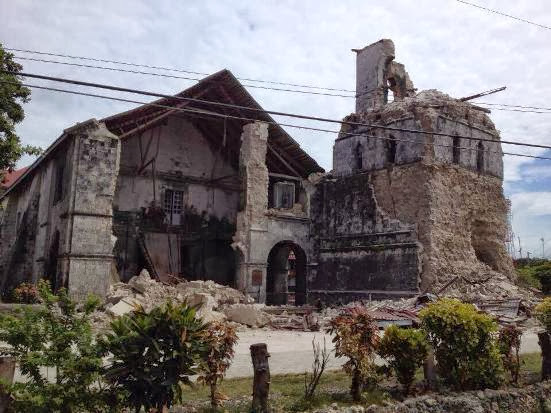
Our Lady of the Assumption in Dauis, Bohol
Online sources do not agree on the date of construction of Dauis Church but Jesuit priests Diego de Ayala and Joseph Gregorio are credited as its founders. It features a rich mix of Byzantine and Romanesque architectural influences. Of special note are the 1916 ceiling paintings of Ray Francia.
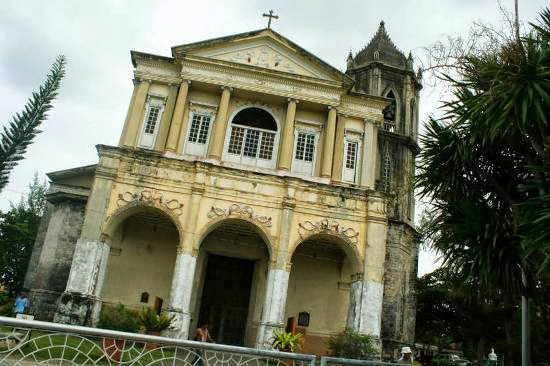
Dauis Church after the calamity.
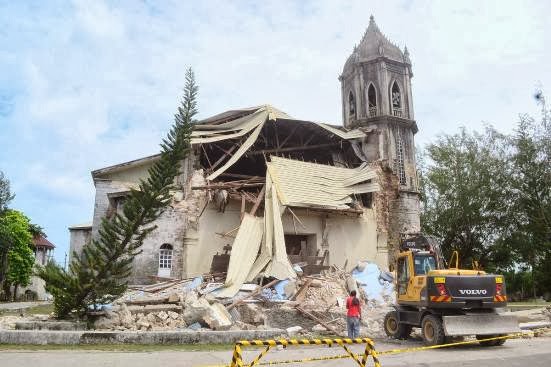
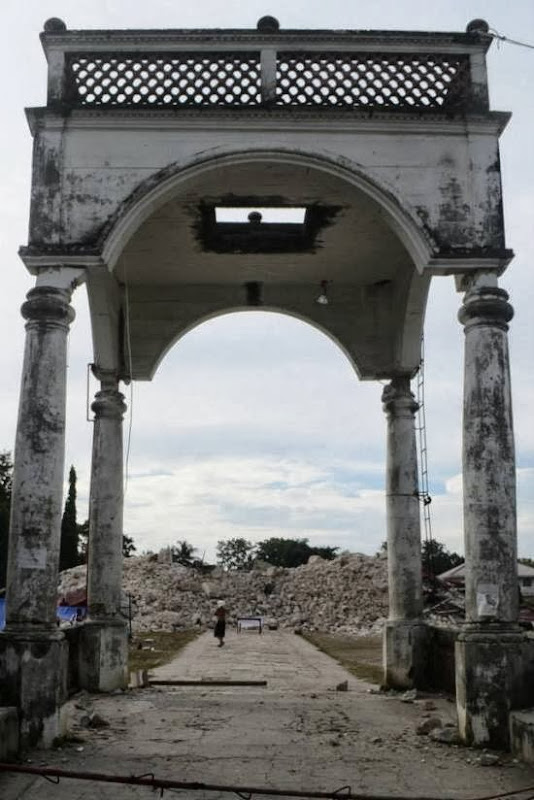
Santa Cruz Parish Church in Maribojoc, Bohol
The church that survived into modern times was constructed from 1852 to 1872. The Maribojoc website however mentions that the foundation of an earlier structure was laid in 1768 which took 18 years to finish.
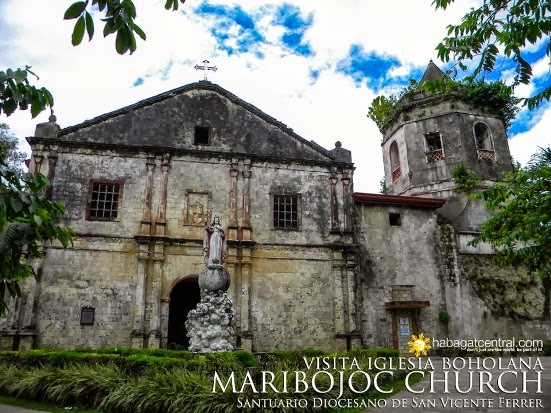
Maribojoc Church in ruins.

Basilica Minore del Santo Niño in Cebu
According to the church’s official website, Fr. Diego de Herrera built a church of wood and nipa in Cebu in 1566. Construction of the present stone church began in 1735. Its façade shows integrated influences of Muslim, Romaneque and Neoclassical architecture.
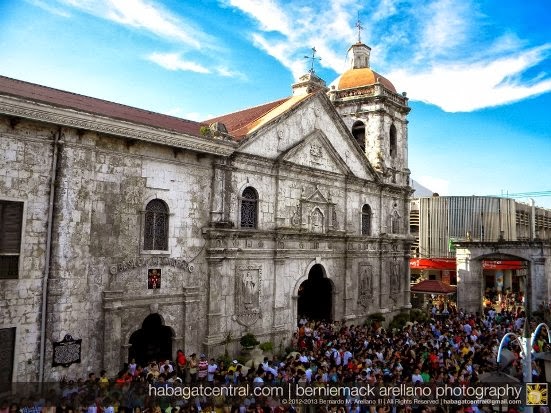
Sto. Niño Church minus its bell tower.
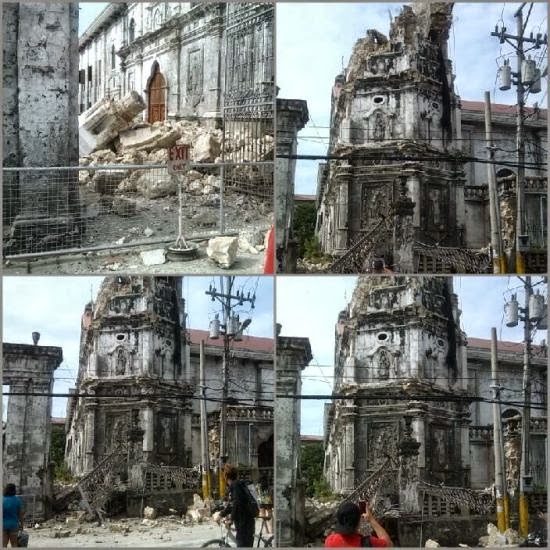
Let us not turn this into a question of religion. An appeal to logic would simply reveal that these are centuries old churches made out of crushed coral and limestone held together supposedly by egg whites, molasses or mud; standing on an earthquake fault. We don’t need an angry heavenly power to level these structures to the ground. A small fart from the constantly shifting earth will do the trick. Setting aside the question of religion, it is important to recognize that what we have lost here is a piece of our nation’s cultural and historical identity.
We should bear in mind though that more important than these structures are the people of Bohol and Cebu, many of whom do not have access to clean water, food and medical assistance. If you wish to help, visit Rappler to find out how.
Information Sources:
- Loon Local Government
- Bohol Churches – Wikipedia
- National Commission for Culture and the Arts
- Loay Local Government
- Baclayon Tourism
- Basilica Sto. Niño
- Maribojoc Local Government
- Special thanks to YouScoop
- Many thanks to my photo sources: Jaie Principe Pimentel, Berniemack Arellano, Joel Aldor, Roman Leo Reyman, Liza Macalandag, Mayor Alvin Uy via @jurisparens and Kim Filoteo
- Videos by Jeffrey Huerte via GMA News and Alain Avelino via ABS-CBN News
I am 100% in favor for the preservation of heritage landmark to remind us the great historical values of such landmark like the century-old churches. For we do that, it is like we do preserve the history for the coming generation for them to learn, to study, to appreciate and value the cultural and historical contribution of such edifices to the lives of every Filipino and his country.
I agree with Sir Gil, restoration is needed to preserve the historical value for the future generations to see our heritage. It is sad and heartbreaking to see beautiful churches ruined by tremors 🙁
It’s really sad that we may have lost a lot of our heritage churches in the quake but I’m sure Bohol and Cebu will rise again.
It’s a very heartbreaking scenes. I’ve watched Jessica Soho last weekend and it made me cry seeing all those churches scattered into pieces.
I’m not sure if these damaged churches can even be restored back to its perfect state once again. Too troubling to know.
let’s do what we can do… if we can’t restore, then build… the important thing is we have our faith in him, no matter what. Yahweh bless.
True, as said above; restoration and preservation is a must. And yes, the people comes first though. Kudos to everyone extending a hand.