Poor Basilio. After everything he’d been through in the Noli and after that, I wish he’d been given a happier fate, but alas, his approaching end is looking pale and dolorous.
Chapter 26: Pasquinades[1]
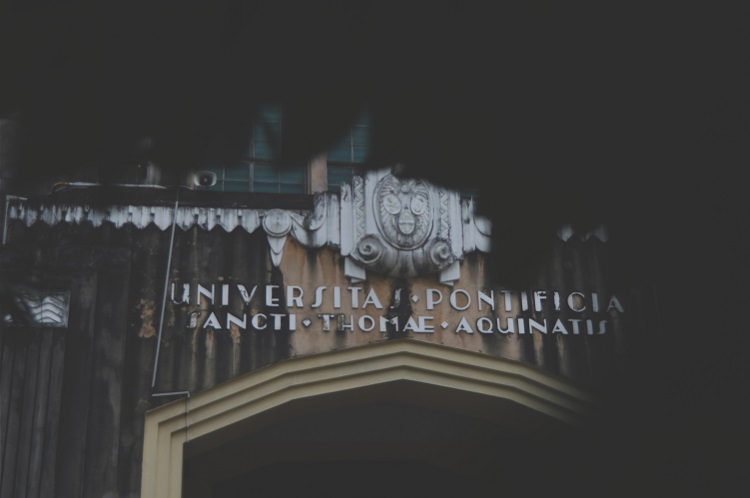
Basilio sets out early to inquire at the university about his license and to ask Makaraig for help with the costs, having spent most of his money in ransoming Juli. Along the way he learns from acquaintances that subversive posters had been found at the university gates and that the students’ union of which he is a member, is being blamed for it.
He meets Sandoval who seems unable to hear his call, and then Tadeo, who, though happy over the cancellation of classes, thinks every union member will be arrested. He also encounters Juanito Pelaez who denounces his involvement with the union.
At the university, he hears Isagani scolding students for fleeing at the threat of imprisonment. Basilio turns away from him and proceeds to Makaraig’s house where he and Makaraig are both arrested.
Chapter 27: The Friar and the Filipino
Padre Fernandez hears Isagani’s impassioned speech to his fellow students and asks to speak with him. He asks Isagani what the students want of the friars. Isagani tells him to do their duty to improve the development of the youth, and not to stifle the pursuit of education.
The priest declares education should only be given to the morally worthy. In response, Isagani blames the failings of the subjugated Filipino to the conquerors who have had centuries, and yet supposedly failed, to mold the moral character of an oppressed people.
Padre Fernandez deflects blame by reasoning that the friars are limited by the the government’s laws. He asks Isagani for a simpler request that the friars can grant, and Isagani asks that students be treated better, to which the priest responds that the students should change first. Isagani reminds him of what happens to students who stand up to their professors.
The priest promises to speak with his brethren about Isagani’s thoughts. He envies the Jesuits who were responsible for Isagani’s early education. The Jesuits however, openly denounce Isagani.
Chapter 28: Tatakut[2]
The incident about the subversive posters results in a great deal of unease among many people. Quiroga sets off to see Simoun about the rifles the jeweler had stored in his warehouse. Simoun, still refusing to see anyone, leaves a message for Quiroga to keep the rifles where they are.
In the afternoon, there is talk of the students having allied themselves with outlaws to take the city by surprise. Padre Irene tells Capitan Tiago that some have advised the Captain-General to implement a reign of terror. The more moderate suggest only a show of force. Capitan Tiago passes away of fright from the priest’s stories.
In other places, the prevailing feeling of anxiety leads to a number of unfortunate consequences, such as an officer mistaking the commotion at a baptism for a riot, and two individuals getting shot by mistake.
At the silversmith’s where Placido Penitente lodges, he and Simoun’s pyrotechnist join the smith workers just as they finish swapping theories about the posters. The pyrotechnist cautions everyone to prepare, as there may be a massacre in the evening.
Chapter 29: Exit Capitan Tiago
Padre Irene is the executor of Capitan Tiago’s last will and testament which divides most of his wealth among the nunnery of St. Clare, and various other religious entities and orders. He revokes Basilio’s legacy of twenty-five pesos, but Padre Irene declares he will pay this anyway out of his own pocket.
It is said Capitan Tiago appeared to the nuns, radiant and dressed in a frock coat. People believe he has been saved due to his numerous masses and pious legacies. His funeral rites are first class, filled with many prayers, rites, incense, holy water and tolling of the bells.
Chapter 30: Juli
News of Basilio’s arrest reaches San Diego and Juli is devastated, more so because people say the arrest was motivated by revenge against her and her father. Juli thinks Padre Camorra may be able to help free Basilio, but shrinks from approaching him when she remembers how the priest asked her for certain sacrifices in exchange for his having procured Juli’s grandfather’s freedom.
A traveler from Manila soon relates that all the prisoners have been released except for Basilio who has no influential protector. This finally convinces Juli to see Padre Camorra. On the same day she visits the priest, a girl is said to have thrown herself from a parish window and died. The following day, Tandang Selo, grieving and stricken, takes his hunting spear and leaves the village forever.
Notes and References:
1. Guerrero translates pasquinades as “subversive posters”. Jose Rizal, El Filibusterismo, Translated by Leon Ma. Guerrero, (Makati City: Guerrero Publishing, Inc., 2012), 227. This is perhaps a close translation, as pasquinades does mean a lampoon, a satiric public criticism of something.
2. Tatakut is translated by Lacson-Locsin as “panic”. Jose Rizal, El Filibusterismo, Translated by Ma. Soledad Lacson-Locsin, (Makati City: Bookmark, Inc., 1997), 310.
Recent Comments